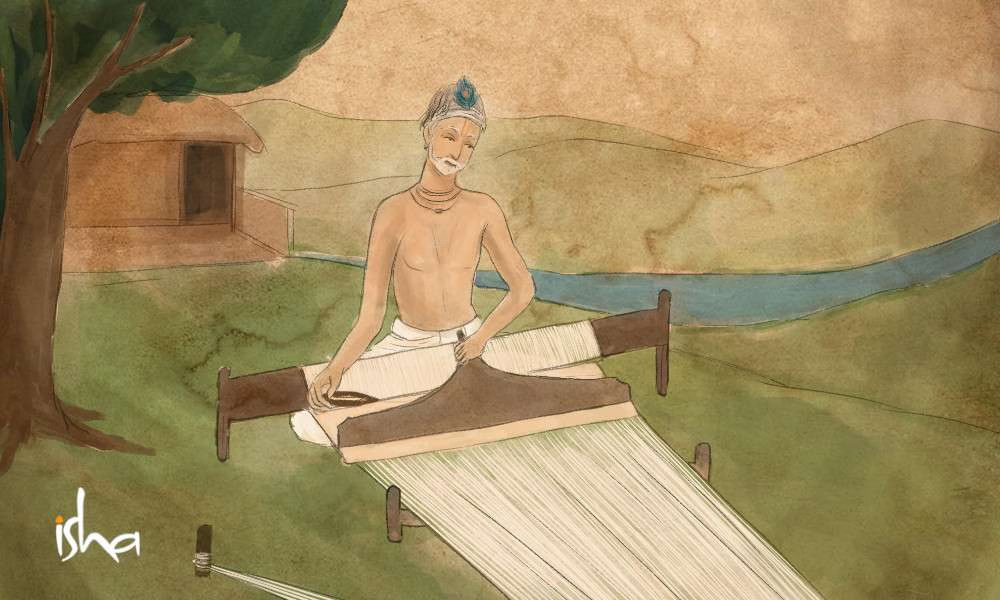
The Eternal Now: Embracing Presence in the Teachings of Kabir
In the poignant words of Kabir, "If He is found now, He is found then; if not, we do but go to dwell in the City of Death." This statement invites us to consider the immediacy of spiritual presence and the consequences of neglecting it. Kabir, a luminary of the bhakti tradition, emphasizes that the divine is not a distant reality to be sought in some future time but is available to us in the present moment. The stakes are high: to miss this presence is to resign ourselves to a life devoid of spiritual vitality, a mere existence that leads us to a metaphorical 'City of Death.'
Delving deeper, Kabir's quote challenges us to confront our relationship with time and existence. The notion of 'now' serves as a gateway to understanding the divine, suggesting that our spiritual journey is not linear but rather cyclical and immediate. This perspective compels us to recognize that every moment holds the potential for divine encounter. The urgency of this realization is profound; it beckons us to awaken to the present, lest we drift into a state of spiritual stagnation, where life becomes a series of unfulfilled longings and missed opportunities.
The image / the metaphor
At its core, Kabir's quote employs vivid imagery to convey the essence of spiritual awakening. The phrase "found now" evokes a sense of immediacy and presence, while "the City of Death" starkly contrasts this with the bleakness of a life lived without connection to the divine. The verbs "found" and "dwell" suggest an active engagement with spirituality; to find is to seek and discover, while to dwell implies a state of being that is either vibrant or lifeless. This duality encapsulates the essence of human experience: the choice between spiritual fulfillment and existential despair.
Going deeper into the metaphor, the 'City of Death' can be interpreted as a state of disconnection from the divine, where one is trapped in the mundane and the material. It symbolizes a life devoid of meaning, where the soul languishes in the shadows of ignorance and separation. In contrast, the act of finding the divine now signifies a transformative awakening, a moment where the seeker transcends the limitations of time and space. This metaphor serves as a powerful reminder that our spiritual journey is not about future aspirations but about the choices we make in the present.
In the speaker's tradition
Kabir's teachings are deeply rooted in the bhakti tradition, which emphasizes personal devotion and the intimate relationship between the seeker and the divine. Concepts such as bhakti, or loving devotion, and fana, the annihilation of the self in the divine presence, resonate profoundly with the essence of this quote. In bhakti, the focus is on surrendering the ego and recognizing that the divine is not separate from us but is woven into the very fabric of our existence. This understanding aligns with the idea of dharma, where living in accordance with one's true nature leads to spiritual fulfillment.
To further illustrate this, we can look at the teachings of other saints within the bhakti movement, such as Mirabai or Tulsidas, who similarly emphasized the importance of finding the divine in the present moment. In the Ramayana, Tulsidas speaks of the omnipresence of Lord Rama, suggesting that the divine is always accessible to those who seek with a pure heart. This interconnectedness of the bhakti tradition reinforces Kabir's message: the divine is not a distant goal but a present reality waiting to be embraced.
Living the teaching
Consider a modern scenario where this teaching resonates: a busy professional caught in the relentless cycle of work and obligations. Each day blurs into the next, filled with tasks and deadlines, leaving little room for reflection or connection to the divine. In this context, Kabir's reminder to find the divine now becomes a call to pause, to breathe, and to recognize the sacredness of each moment. By cultivating mindfulness and intentionality, one can transform mundane activities into opportunities for spiritual awakening, thereby avoiding the descent into the 'City of Death.'
Another application of this teaching can be found in personal relationships. Imagine a couple who, despite living together, have grown distant due to the distractions of daily life. Kabir's wisdom encourages them to reconnect in the present, to find joy and love in their shared moments rather than postponing happiness for a future ideal. By actively engaging with each other and recognizing the divine spark within one another, they can revitalize their relationship and avoid the emotional stagnation that can lead to a metaphorical death of connection.
A reflection
As we contemplate Kabir's profound words, we are invited to ask ourselves: In what ways am I neglecting the divine presence in my life? This question serves as a mirror, reflecting our choices and priorities. It challenges us to consider how we might cultivate a deeper awareness of the present moment, allowing us to experience the richness of life and the divine that permeates it. By embracing this inquiry, we open ourselves to the possibility of transformation and awakening, ensuring that we do not dwell in the 'City of Death' but instead thrive in the vibrant landscape of spiritual presence.




Join the BrightStar Community
Stay connected with daily inspiration, event announcements, and community wisdom